한강의 ‘여수의 사랑’을 읽고 Where Yeosu Meets Memory: Reading Han Kang Again
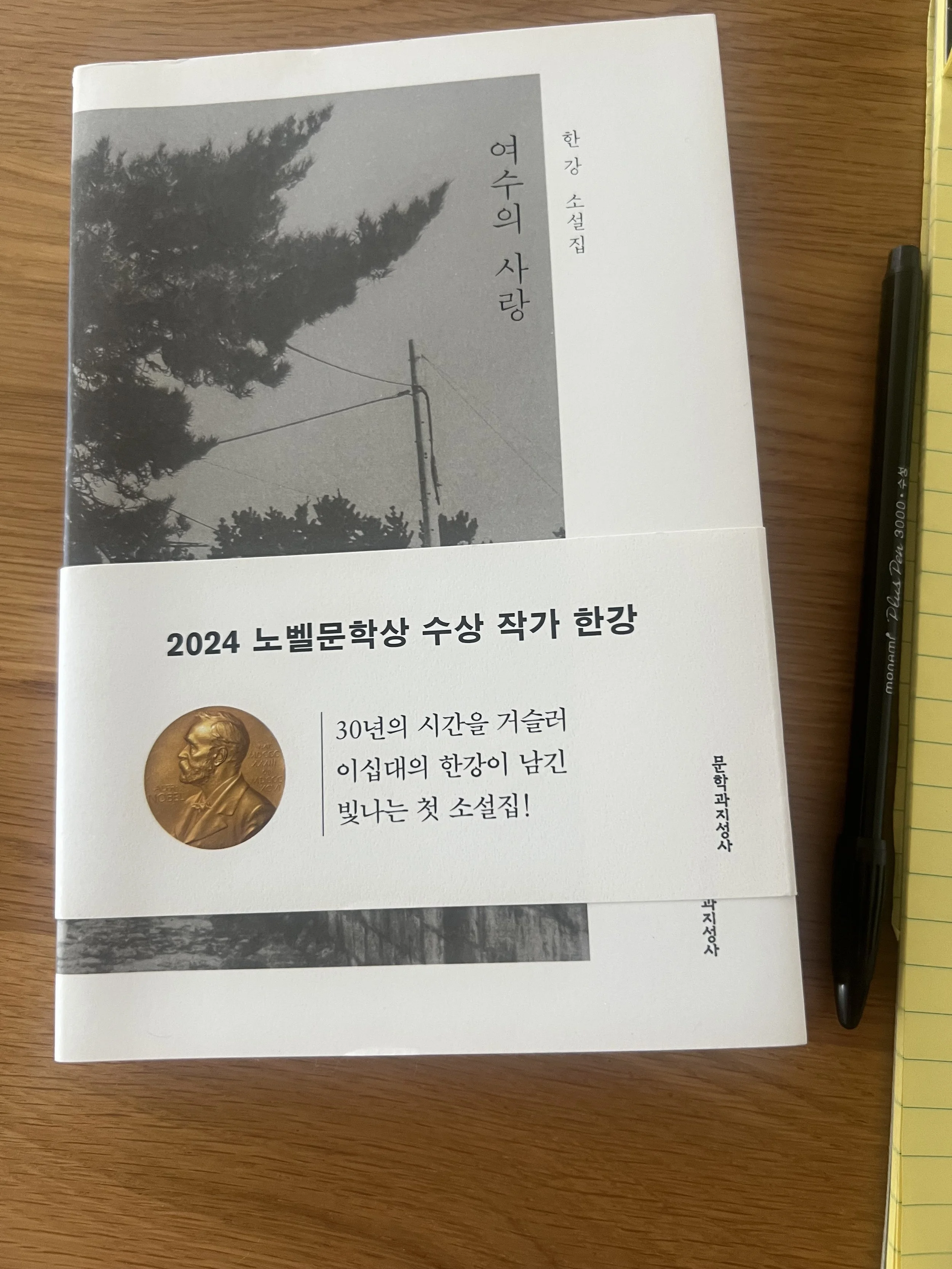
taken by myself
원인 모를 끙끙거림을 앓던 시절이 있었다. 아마 스무살 무렵였던 것 같다.
There was a time in my life when I carried around a vague, nameless heaviness.
I think I was around twenty.
많이 읽었고, 많이 쓰던 시절이었다. 그러지 않으면 견딜 수가 없었다. 도서관에 있는 ‘문학’으로 분류되어 있던 800번대는 거의 다 읽었었고, 수중에 있던 적은 돈으로 문학 잡지를 구독하는 사치를 누리기도 했다.
Those were the years when I read endlessly and wrote compulsively, as if doing anything else would make life unbearable. I devoured nearly everything in the 800 section of the library—the shelves marked “Literature”—and even indulged in the small luxury of subscribing to literary magazines with the little money I had.
나는 그때부터 한강을 읽기 시작했다. 당시에 그녀는 처음 문단에 얼굴을 들이밀었고, 비슷한 시대를 살아가는 젊은이로서 흠모와 질투를 안고 그녀의 글을 읽었다.
It was around then that I began reading Han Kang. She had only just begun to appear in the literary world, and as someone living through the same era, I read her with a mixture of admiration and an almost painful jealousy.
나는 아마 ‘여수의 사랑’을 읽다가 만 것 같다. 그냥 그러고 싶었다. 사실 거기에 나오는 ‘자흔’이라는 이름이 너무 낯간지러워 견딜 수가 없었다. 그때까지도 여수에 가보지 않아서일지도 모른다. 무릇 글을 쓰기 위해서는 장거리 여행도 마다하지 않고 훌쩍 떠나야하지 않을까 그런 생각도 했던 것 같다. 훗날 여수를 몇번 여행하면서 얼마나 ‘여수의 사랑’을 생각하였던가. 그러면서도 다시 읽을 생각을 하지 않았다. 여수에 대한 나의 경험이 너무 늦었다고, 그녀의 글을 읽기에는 나는 너무 나이가 들어버렸다고 생각을 하였다.
I think I abandoned Love of Yeosu halfway through. I simply wanted to. Perhaps it was because the protagonist’s name, Jahŭn, felt unbearably self-conscious to my young sensibilities. I hadn’t yet been to Yeosu, and maybe that was part of it too. I believed—rather naively—that to write, one must be willing to take long, impulsive journeys. And later, when I finally visited Yeosu several times, I couldn’t help but think of her book each time.
Yet I never returned to read it again.
I felt that my experience of Yeosu had come too late, that I had grown too old to meet that book once more.
이번 9월에 한국 다녀오면서 여수의 사랑을 샀다. 책 표지에 그녀의 첫소설집이라고 써 있었다. 그랬다. 우리가 이십 대일 때에는 뭐라도 쓰지 않으면 견딜 수 없었고, 나는 나의 글들을 폐기하였지만, 그녀는 글들을 다듬어내어 세상에 얼굴을 내밀게 하였다.
This September, during a short visit to Korea, I bought Love of Yeosu again. The cover called it her “first collection of stories,” and of course it was. In our twenties, she and I were both people who couldn’t bear the thought of not writing. But while I eventually discarded what I wrote, she refined hers and released them into the world.
삶은 하나의 길로 이루어져있다. 그말인즉슨 삶이 아니면 아무것도 아닌 것이다. 우리는 살면서 많은 죽음들을 목도하지만 정작 죽는 당사자가 아니기에 산 사람이 죽음은 삶의 한 갈래로서 뭔가 생동한다고 하는 것은 상식적으로 맞지 않다.
Life, I’ve come to realize, is made of a single path—
which is to say, apart from life, nothing else truly belongs to us.
We witness many forms of death along the way, but since we are not the ones dying, those deaths remain strangely alive to us. It is, logically speaking, an odd contradiction.
살아있기에 우리의 경험은 처음이다. 비슷한 것들을 간접적으로 체험할 수 있다고 해도 나의 생에서는 이 경험들은 무조건 처음이다. 그러니 이십 대의 내가 처음인 것이 어떠한 것이라고 깨달았다면 조금더 용기를 내어 내가 쓴 글을 세상에 남기었을지도 모르겠다. 하지만 두려웠다. 완벽하지 않아서 두려웠다. 등단을 하는 사람들은 완벽한 세계에서 글을 써 내려가는 사람들이라는 생각을 했는지도 모르겠다.
Because we are alive, every experience we encounter arrives as something new. Even if we brush against similar emotions secondhand through stories or people, in the landscape of my life, everything is always happening for the first time. Perhaps if my twenty-year-old self had understood this, I might have found the courage to leave my writing in the world instead of hiding it. But I was afraid—afraid that my work wasn’t perfect, afraid that “real writers,” the ones who debuted, wrote from some flawless realm I could never reach.
다시 ‘여수의 사랑’을 읽었다. 끝까지 다 읽어내려갔다. ‘자흔’이라는 이름이 중요한 게 아니었다. 나의 여수 여행에 대한 경험은 오히려 더 풍성하게 이 글을 읽는 데에 도움을 주었다. 그녀가 제목에 사랑이라는 말을 붙였지만, 실제로는 쓸쓸한 이야기이다.
This time, I read Love of Yeosu all the way to the end.
And I realized that Jahŭn’s name had never really mattered.
My own memories of Yeosu, collected slowly and belatedly over the years, only deepened my understanding of the story.
Though Han Kang chose to put the word love in the title, the story itself is steeped in loneliness.
Interested in Structured Korean Coaching?
If you are serious about improving your Korean, personalised coaching can help you progress at any level.
✔ Adult and heritage learner programs
✔ Beginner to advanced Korean learning
✔ Structured long-term coaching
✔ Communication-focused lessons