


지금 추워요? 더워요? Is It Cold or Hot Right Now?
Why is it 더워요, not 덥어요? As Sydney welcomes summer under a canopy of purple jacaranda blossoms, discover how Korea and Australia experience opposite seasons and learn one of the most common Korean irregular conjugation patterns: ㅂ irregular verbs.
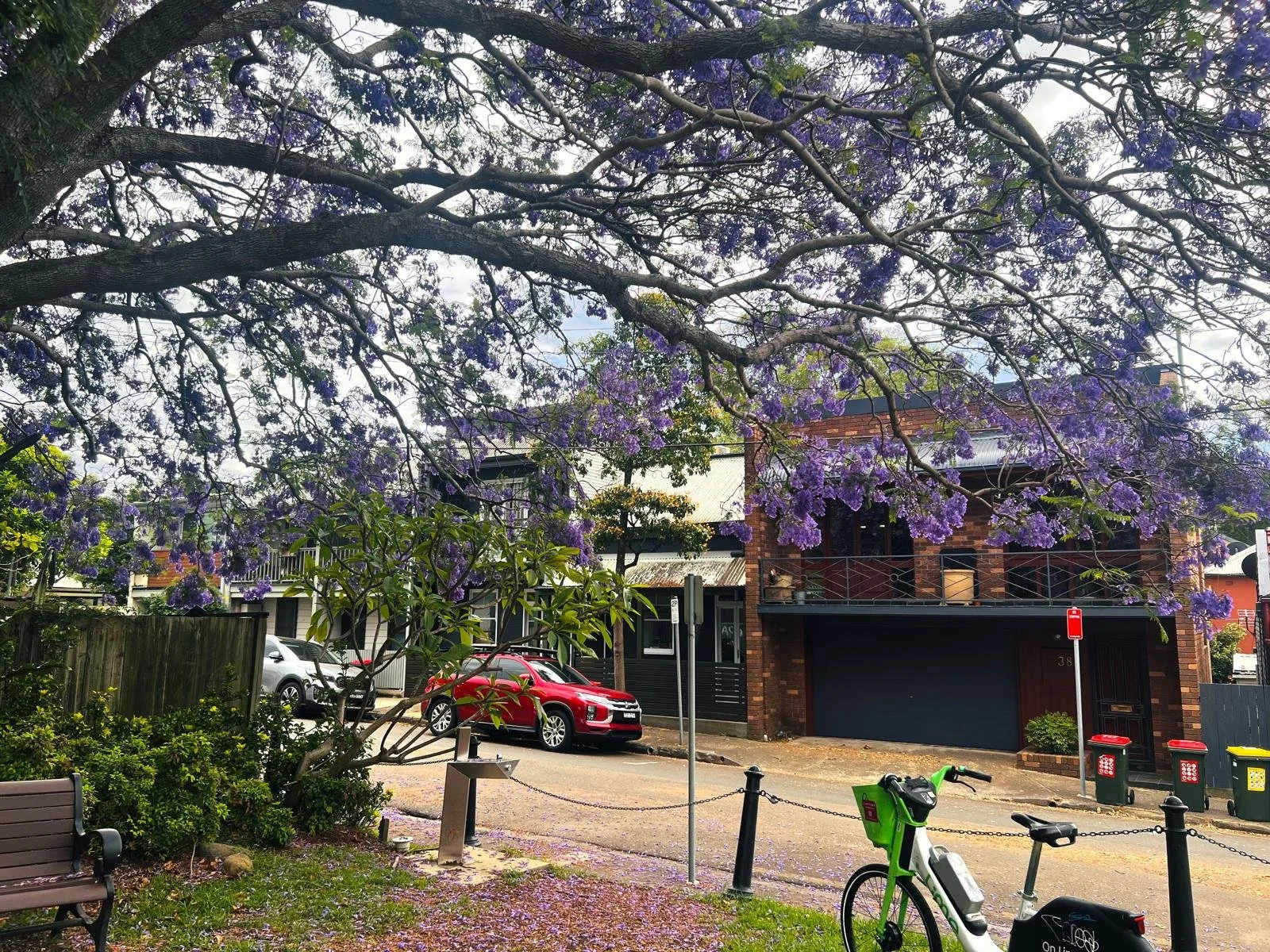
나는 지금 호주 시드니에서 살고 있다.
호주는 남반구에 위치하고 있다. 그러므로, 북반구에 위치한 한국과는 반대로 계절이 흐른다.
바야흐로, 한국은 겨울에 들어간다.
반대로 호주는 여름으로 들어간다.
한국에서 벚꽃이 피고 신록이 흐드러진 후에 여름이 찾아오듯이,
호주는 보라색의 자카란다가 피고 여름이 찾아온다. 그래서 지금 나라 전체가 보라색이다. 이제는 꽃이 지고 있는 때라서 나무 위 뿐만 아니라 바닥도 떨어진 꽃들도 인해 보라색이다.
오늘은 시드니 날씨는 32도로 매우 더운 날씨이다.
금요일부터 덥기 시작하더니 월요일인 오늘도 꽤나 더운 날씨이다.
덥다.
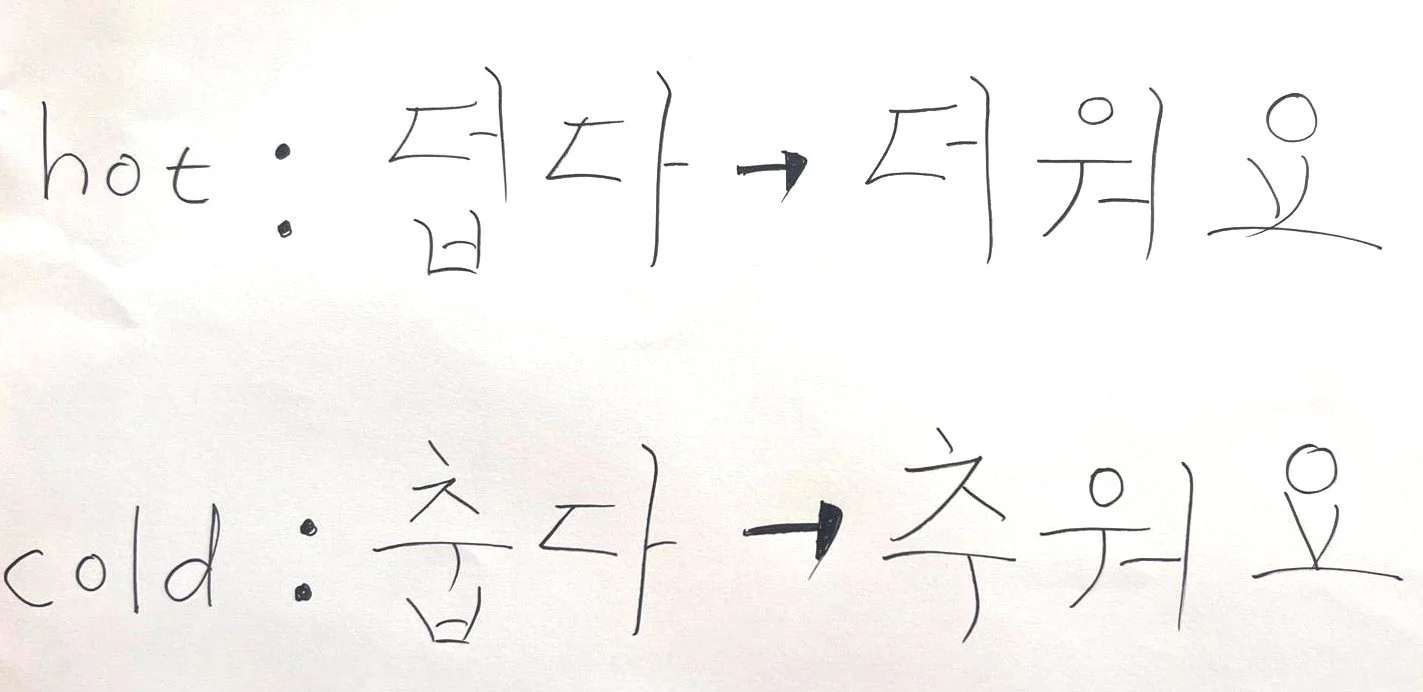
‘덥다’는 기본형이다. 이것을 해요체로 바꾸면 ‘더워요’이다.
즉,
덥다 → 더워요
의 양태를 띤다.
‘덥어요’라고 ‘어요’ 종결어미를 바로 붙여버리면 잘못된 용언의 활용이 된다. 왜냐하면,
‘덥-’의 받침 ‘ㅂ’이 ‘우/ㅜ’로 바뀌기 때문이다. 이것을 ‘ㅂ불규칙’이라고 하는데,
많은 학습자들이 한국어를 배울 때 처음 겪는 불규칙 현상이라서 꽤 낯설어한다.
‘ㅂ’의 위치를 잘 생각해보면 ‘우’와 매우 흡사하다.
따라서 이 ‘ㅂ불규칙’은 아주 자연스러운 현상으로 이해하면 된다.
그래서 지금 호주는 ‘더워요.’
한국은 어떤가?
한국은 ‘춥다’. 해요체로 바꾸면?
‘추워요.’이다.
다들 겨울 준비, 여름 준비를 잘 하고 있기를 바란다.
Is It Cold or Hot Right Now?
I currently live in Sydney, Australia.
Australia is located in the Southern Hemisphere, which means its seasons are opposite to those in South Korea, located in the Northern Hemisphere.
As winter approaches in Korea, Australia is heading into summer.
Just as summer arrives in Korea after the cherry blossoms bloom and the trees become lush with fresh green leaves, summer in Australia arrives after the jacarandas burst into bloom with their beautiful purple flowers.
That is why the whole country seems to be covered in purple at this time of year. The jacaranda season is now coming to an end, and the flowers are beginning to fall. Not only are the trees covered in purple, but the ground beneath them is also carpeted with fallen blossoms.
Today, the temperature in Sydney is 32°C, making it a very hot day.
The weather started getting hot on Friday, and even today, Monday, it is still quite hot.
덥다 (to be hot).
This is the dictionary form of the adjective. How do we change it into the haeyo-che (polite conversational) form?
It becomes 더워요 (It's hot).
In other words:
덥다 → 더워요
If we simply attach the ending -어요 to 덥다 and say 덥어요, it would be an incorrect conjugation.
Why?
Because the final consonant, ㅂ, in the stem 덥- changes to 우 (u) when certain vowel endings are added. This is known as the ㅂ irregular conjugation (ㅂ 불규칙 활용).
Many Korean learners encounter this as one of their first irregular conjugation patterns, so it can feel quite unfamiliar at first.
However, if you look closely at the shape and position of ㅂ, you might notice that it has some visual similarities to 우. Thinking about this connection can help you remember the change more naturally.
So, right now, in Australia, we say:
더워요! (It's hot!)
What about Korea?
한국은 춥다. (Korea is cold.)
And how do we change 춥다 into the haeyo-che form?
추워요! (It's cold!)
I hope everyone is getting ready for the season ahead, whether that means preparing for winter or getting ready for summer.
Stay warm, or stay cool, wherever you are!