한국어의 숫자와 단위 Korean Numbers and Counting Units
한국어를 배우는 초급자에게 여러 고비들이 있다.
그 중에 하나를 꼽자면 한국어의 숫자는 한 가지가 아니라는 점이다. 고유한 숫자인 하나, 둘, 셋, 넷, 다섯… 등과 같은 것들이 있고, 다른 하나는 중국어에서 온 숫자들이다. 바로 일, 이, 삼, 사, 오… 등이 그것들이다.
뭐 여기까지는 괜찮다. 워낙에 한국어는 오래된 언어라서 고유한 숫자의 이름들이 존재하는 것은 어쩌면 당연한 이야기이다. 그리고 중국과의 교류 또한 오래된지라 중국에서 온 숫자들도 같이 쓰는 것에 큰 불만들이 없을 것이다.
문제는 시간을 이야기할 때이다.
시는 고유한 한국어의 숫자인 하나, 둘, 셋, 넷 등을 쓴다.
분은 중국에서 온 숫자인 일, 이, 삼, 사 등을 쓴다.
한국인으로서 이는 어릴때부터 접한 숫자체계라서 아무런 의문점이 없었는데, 막상 가르치는 입장에서는 백이면 백 모두 고개를 절래절래 흔든다. 같은 숫자체계를 쓰지 않아서 힘든 것이다. 같은 숫자로 읽으면 얼마나 편하겠는가.
게다가 시간을 이야기할 때에 ‘시’와 ‘분’은 단위이고, 이를 숫자와 결합하면 어떨 때에는 원래의 형태가 아닌 조금 다른 형태를 쓴다. 다음을 읽어 보자.
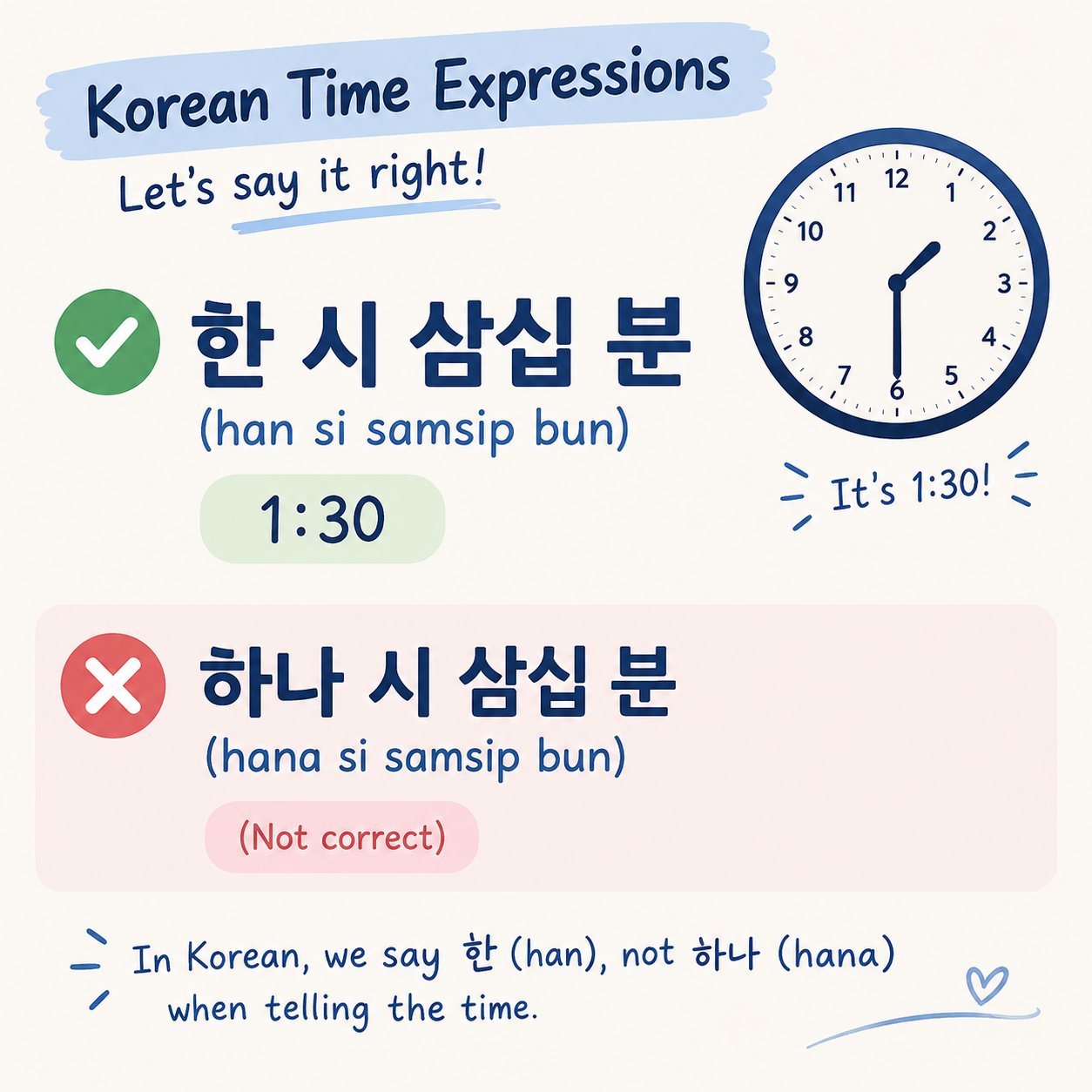
1 : 30
이를 읽자면, ‘한 시 삼십 분’이다. 즉, ‘하나 시 삼십 분’이 아닌 것이다.
단위와 결합할 때에 한국어의 고유한 숫자들은 조금 다른 형태를 나타낸다.
정리하면 다음과 같다.
하나(1) → 한
둘(2) → 두
셋(3) → 세
넷(4) → 네
스물(20) → 스무
그래서 가령 ‘고양이 3마리’를 읽을 때에는 ‘고양이 셋 마리’가 아닌 ‘고양이 세 마리’가 된다. 당신이 만약 20살이면 ‘스무 살’로 말해야 한다. 당신이 만약 23살이면 ‘스물 세 살’로 말해야 한다.
이 고비를 넘기면 된다. 당신은 이미 많이 알고 있다. 설사 시간을 달리 말해도 괜찮다. 시간을 볼 때 생각이 나면 연습하기를 권한다.
There are several hurdles for beginners learning Korean.
One of them is the fact that Korean has not one, but two different number systems.
There are native Korean numbers such as hana, dul, set, net, daseot (one, two, three, four, five…), and there are Sino-Korean numbers that came from Chinese, such as il, i, sam, sa, o (one, two, three, four, five…).
So far, so good.
Korean is a language with a long history, so it is hardly surprising that it has its own native number system. And given the long history of cultural exchange with China, it is also understandable that Sino-Korean numbers became part of the language.
The real problem comes when talking about time.
For the hour, Korean uses native Korean numbers: hana, dul, set, net, and so on.
For the minutes, it uses Sino-Korean numbers: il, i, sam, sa, and so on.
As a Korean, I grew up with this number system, so I never really questioned it. But when I started teaching Korean, I realized just how confusing it can be. Almost every beginner shakes their head when they encounter it.
The problem is simple: you are using two different number systems for the same thing.
Wouldn't it be much easier if we could just use the same numbers?
And there is another little complication.
When native Korean numbers are combined with certain counting units, they sometimes change their form.
For example, look at this:
1:30
In Korean, this is read as:
한 시 삼십 분 (han si samsip bun)
Not:
하나 시 삼십 분 (hana si samsip bun)
When native Korean numbers are used together with counting units, some of them change slightly:
하나 (1) → 한 (han)
둘 (2) → 두 (du)
셋 (3) → 세 (se)
넷 (4) → 네 (ne)
스물 (20) → 스무 (seumu)
So, for example, “three cats” is not:
고양이 셋 마리 (goyangi set mari)
but:
고양이 세 마리 (goyangi se mari)
And if you are 20 years old, you say:
스무 살 (seumu sal)
If you are 23, you say:
스물세 살 (seumul-se sal)
Once you get past this hurdle, you're already well on your way. You probably know much more Korean than you think.
And don't worry if you sometimes say the time incorrectly. That's perfectly fine.
The next time you look at a clock, try reading the time out loud in Korean.
A little practice every time you check the time will gradually make this confusing number system feel much more natural.