다시 무진을 여행하다 Traveling to Mujin Again
매주 토요일 이른 아침이면 오래된 중고차로 시드니 남쪽에서 북쪽으로 출근한다.
벌써 10년째 토요일마다 한글학교에 가서 학생들을 가르치고 있다.
모든 길에는 이정표가 있고 방향이 있는데, 숫자를 제외하고는 모두 영어로 되어 있다. 옆차를 흘끗 보면 운전자는 나와 다른 인종의 사람이다. 한 시간여를 운전하는 동안 보통은 한국어로 된 팟캐스트를 듣는다. 한국 문학이나 한국 사회 전반에 대한 내용들이 대부분이다. 듣다보면 내 마음은 어느새 한국에 가 있다.
며칠전에는 김승옥의 “무진기행”을 소개하는 팟캐스트를 들었다. 진행자는 얼마나 이 소설에 빠졌는지 소설을 필사까지 했노라고 경험을 들려주었다. 나도 그랬었지. 나도 십대 때 “무진기행”을 너무나 좋아했었다. 아마 열 다섯, 열 여섯 살 정도 되었으리라. 얼마나 빠져들었는지 그때에는 실제로 존재하지 않았던 ‘무진’이라는 곳이 사실은 ‘순천’을 배경으로 썼으리라는 말에 순천을 가고 싶어 꽤 마음 앓이를 했다. 무진은 있지 않았던 곳인데도 김승옥은 마치 실제 있는 곳처럼 그곳을 묘사했다. 그것조차 나의 마음을 사로잡았다. 이런 상상력으로 글을 쓰고 싶었다. 그리고 아마 내 나이 마흔 즈음에 순천을 처음으로 여행을 했었다. 김승옥의 묘사처럼 안개의 고장이었다. 순천만 습지는 그 습습한 흙내 속에서 많은 비밀들을 품고 있었다.
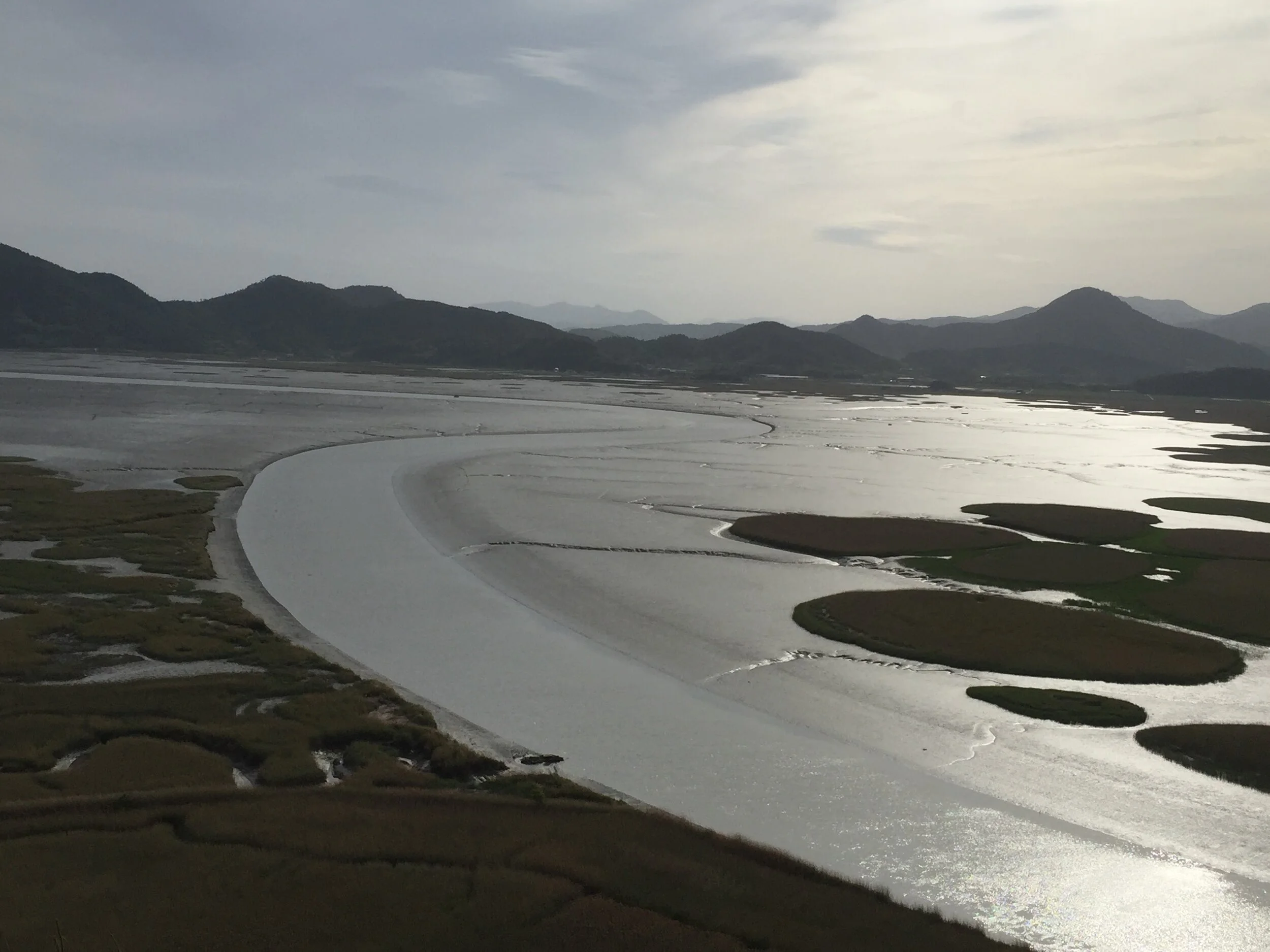
순천만 습지 Suncheon Bay Wetland
“무진기행”은 이렇게 시작한다.
“버스가 산모퉁이를 돌아갈 때 나는 '무진 Mujin 10km'라는 이정비를 보았다.“
독자들에게 무진으로 들어가게 하는 이정표인 셈이다. 그리고 지독한 안개 속에 있던 무진에 대한 이야기가 펼쳐진다.
“무진기행”은 내가 본격적으로 한국 문학에 몰입하게 만든 소설이다. 김승옥이 스물 세 살에 썼다는데, 십대의 나는 내 나이를 셈하면서, 나도 곧 소설을 쓰리라, 나도 이렇게 빛나는 글을 쓰리라 생각 했었다. 김승옥의 문장을 하나하나 곱씹으며, 길지 않은 이 소설을 금방 읽기를 거부하며, 정말 여러 번 읽었더랬다.
그런데 많은 일들이 내 생애에 일어나면서 근 십여 년동안 이 소설을 잊었다. 어떻게 그럴 수 있을까. 그렇게 가슴 두근거리게 하던 빛나는 글이었는데 말이다.
하지만 며칠전, 이상하게도 호주 시드니 한복판에서 영어 이정표를 보며 운전하면서 팟캐스트를 듣다가 “무진기행”은 다시 나에게 왔다. 길다면 길었던 나의 삶 속에서 파묻힌 그 소설은, 바삐 학교에 출근하는 내게 다시 무진으로 가보라고 말을 전해주는 것 같았다. 여기는 시드니인데, 어느 한적한 길 모퉁이에 무진으로 가는 이정비가 있을 것만 같았다. ‘무진 10km라는 이정비’가 내게 다시 그 소설 안으로 들어가라고 하는 것 같았다. 그럼 나는 가슴앓이하던 그때로 돌아가서 무진을 여행하리라. 안개로 감싸진 비밀을 찾아가는 그 마음으로.
무진기행은 이렇게 끝이 난다.
“덜컹거리며 달리는 버스 속에 앉아서 나는, 어디 쯤에선가, 길가에 세워진 하얀 팻말을 보았다. 거기에는 선명한 검은 글씨로 '당신은 무진읍을 떠나고 있습니다. 안녕히 가십시오.'라고 씌어 있었다. 나는 심한 부끄러움을 느꼈다.”
삶이라는 여행을 하고 있다. 그 여행 중에 많은 일들이 일어났고, 어떤 일들은 해결이 가능했고, 어떤 일들은 남겨진 채로 두고, 그 어떤 의무를 다해야 할 때도 있었고 누구에게도 말하고 싶지 않았던 비밀들도 새겨진 채 살고 있다. 마치 안개 속에서 삶을 살아가던 무진 지방의 사람들과 여행자들처럼 말이다.
나는 어쩌면 오래전에 무진을 떠나온 사람일 것이다. 부끄러움을 간직한 채 나왔고 계속 살면서 그 부끄러움조차 잊었다. 내가 “무진기행”을 좋아했던 사실조차 잊었다.
아마 다시 무진으로 가야할 것 같다. 이번에는 부끄러움을 미리 안고 말이다.
Every Saturday morning, early in the day, I drive from the south of Sydney to the north in my old second-hand car to go to work.
It has already been ten years. Every Saturday, I go to a Korean language school to teach my students.
There are signposts along every road, each pointing the way and telling me where I am going. But apart from the numbers, all the words on them are in English. If I glance at the car beside me, the driver is usually someone of a different race.
For the hour or so that I spend driving, I usually listen to Korean podcasts. Most of them are about Korean literature or Korean society in general. As I listen, somehow, my mind finds its way back to Korea.
A few days ago, I was listening to a podcast about Kim Seung-ok's Mujin Travelogue. The host talked about how deeply he had fallen in love with the novel—so deeply that he had even copied the entire book out by hand.
I had done that, too.
As a teenager, I loved Mujin Travelogue more than I can say. I must have been fifteen or sixteen. I was so completely absorbed in the novel that when I heard that Mujin, which did not actually exist, was supposedly based on Suncheon, I desperately wanted to go there. I suffered over it for quite some time, longing to visit Suncheon.
Mujin was not a real place, yet Kim Seung-ok described it as though it truly existed. Even that captivated me. I wanted to write with that kind of imagination.
And perhaps when I was around forty, I finally made my first trip to Suncheon. It really was, just as Kim Seung-ok had described it, a place of mist. Suncheon Bay Wetland seemed to hold countless secrets in its damp earth and heavy, humid air.
Mujin Travelogue begins like this:
“As the bus turned around a bend in the mountain road, I saw a signpost that read, ‘Mujin 10 km.’”
It was, in a sense, the signpost that led the reader into Mujin. And from there, the story of Mujin, wrapped in a relentless fog, unfolds.
Mujin Travelogue was the novel that drew me deeply into Korean literature.
I heard that Kim Seung-ok wrote it when he was only twenty-three. As a teenager, I would count the years between his age and mine and think, Soon, I will write a novel, too. I will write something this brilliant.
I savored every sentence Kim Seung-ok had written. I refused to rush through the short novel. I read it again and again, turning its sentences over in my mind.
And yet, as so many things happened in my life, I somehow forgot the novel for nearly ten years.
How could I have forgotten it?
It had once made my heart race. It had seemed so luminous.
But a few days ago, strangely enough, Mujin Travelogue found its way back to me.
I was driving through Sydney, in Australia, looking at English signposts and listening to a Korean podcast. And suddenly, that forgotten novel, buried somewhere deep in the long years of my life, seemed to be telling me to go back to Mujin.
This is Sydney, after all. And yet, as I drove along some quiet bend in the road, I could almost imagine seeing a signpost pointing the way:
MUJIN 10 KM.
It felt as though that signpost were asking me to enter the novel once again.
Then I would return to the girl who had once ached to visit Mujin. I would travel there with the same heart I had back then—the heart of someone searching for secrets hidden inside the fog.
Mujin Travelogue ends like this:
“As I sat on the rattling bus, I saw, somewhere along the road, a white signpost. In clear black letters, it said, ‘You are leaving Mujin-eup. Goodbye.’ I felt a deep sense of shame.”
I am traveling through life.
Along the way, many things have happened. Some could be resolved; others had to be left behind. There were times when I had to fulfill certain obligations, and there are secrets etched into me that I never wanted to tell anyone.
I have carried them with me, just as the people and travelers of Mujin lived their lives in the fog.
Perhaps I am someone who left Mujin a long time ago.
I left carrying a sense of shame, and as I continued living, I even forgot that shame.
I forgot, too, that I had once loved Mujin Travelogue so deeply.
And yet, somehow, after all these years, a signpost appeared again.
Mujin 10 km.
Perhaps it is time to go back.